
If you've ever watched a Japanese apartment tour on YouTube or scrolled through social media, you've probably wondered the same thing:
"How can someone live in a place that small?"
While Japan certainly has its share of spacious homes and luxury condos, tiny apartments have become an iconic part of urban life. From compact studio units barely larger than a hotel room to micro-apartments designed with every centimeter in mind, these homes reflect Japan's unique combination of limited land, high population density, and clever design.
But are they really as impractical as they seem?
Let's take a closer look at why tiny apartments exist, how people make them work, and whether they're actually worth living in.
Why Are Japanese Apartments So Small?
The biggest reason is simple: space is expensive.
Major cities like Tokyo, Osaka, and Yokohama have millions of residents competing for limited land. As demand increases, developers build smaller units that are more affordable for students, young professionals, and single residents.
Several factors contribute to the trend:
- Extremely high urban population density
- Expensive land prices
- Excellent public transportation reduces the need for large garages or storage
- Many people live alone before marriage
- Shorter average commuting distances encourage city living
For many residents, sacrificing living space means gaining easier access to work, entertainment, and public transit.
How Small Are We Talking?
Apartment sizes vary, but here's a general idea.
| Apartment Type | Approximate Size |
|---|---|
| Micro Apartment | 10–18 m² (108–194 sq ft) |
| 1R (One Room) | 13–20 m² (140–215 sq ft) |
| 1K | 18–25 m² (194–269 sq ft) |
| 1DK | 25–35 m² (269–377 sq ft) |
| 1LDK | 35–50+ m² (377–538+ sq ft) |
A 10-square-meter apartment may sound impossible, but with thoughtful furniture placement and minimal belongings, many people successfully call these spaces home.
Understanding Japanese Apartment Names

One thing that confuses newcomers is Japan's apartment naming system.
Here's a quick breakdown:
- 1R (One Room) – Everything is contained in one space except the bathroom.
- 1K – One room plus a small separate kitchen.
- 1DK – One room with a dining kitchen.
- 1LDK – One bedroom plus a Living, Dining, Kitchen area.
The more letters, the more separated the living spaces become.
Clever Space-Saving Design
Living in a small apartment requires making every inch count.
Japanese apartments often include surprisingly smart design features.
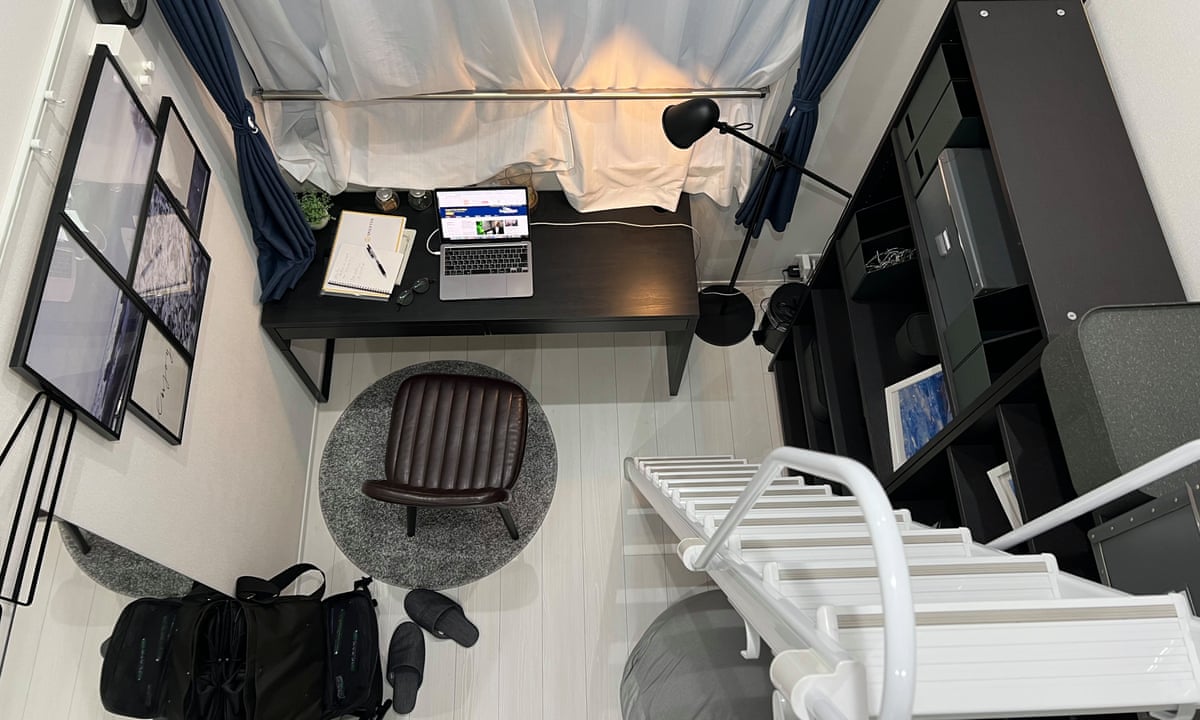
Loft Beds
Many micro-apartments use loft beds, allowing the space underneath to become a desk, closet, or lounge area.
Multi-Purpose Furniture
Instead of owning separate pieces of furniture, residents often choose:
- Foldable tables
- Sofa beds
- Storage ottomans
- Nesting furniture
- Wall-mounted shelves
One piece of furniture may serve three different purposes.
Vertical Storage
When floor space disappears, people build upward.
You'll frequently see:
- Tall shelving
- Hanging organizers
- Over-door storage
- Ceiling-height cabinets
Compact Bathrooms
Japanese unit baths combine several functions into one waterproof room.
Typically you'll find:
- Toilet
- Sink
- Bathtub
- Shower
all within just a few square meters.
Minimalism Isn't Required
People often assume everyone in Japan is a minimalist.
That's not entirely true.
Many residents own plenty of belongings—they simply organize them efficiently. Seasonal clothing may be stored in vacuum bags, bedding is folded away during the day, and closets are used very strategically.
That said, smaller homes naturally encourage people to think carefully before buying new items.
The Benefits of Tiny Apartments
Despite their size, small apartments offer several advantages.
Lower Rent
Smaller units are usually among the most affordable housing options in expensive cities.
Easier Cleaning
Cleaning a 15-square-meter apartment can take less than 20 minutes.
Lower Utility Bills
Heating and cooling a tiny apartment requires much less energy than a larger home.
Great Locations
Many micro-apartments are located close to train stations, making commuting quick and convenient.
The Downsides

Tiny apartments aren't perfect.
Some common complaints include:
- Very limited storage
- Little room for guests
- Difficult to work from home
- Small kitchens
- Limited natural light in some buildings
- Laundry may need to air dry indoors
People who enjoy entertaining or own lots of hobbies requiring equipment may find the lack of space frustrating.
Who Lives in Them?
Tiny apartments are especially popular among:
- University students
- Young professionals
- Office workers
- People living alone
- Individuals staying in Japan temporarily
Families usually move into larger apartments or detached homes as their housing needs grow.
Could You Live in One?
For some people, the answer is surprisingly yes.
If you spend most of your day at work, school, cafés, or exploring the city, your apartment mainly becomes a place to sleep and relax.
Others may quickly feel cramped if they work remotely, enjoy collecting hobbies, or simply value personal space.
Ultimately, living comfortably in a tiny apartment depends less on the square footage and more on your lifestyle.
Tiny Japanese apartments may seem impossibly small at first glance, but they're a practical response to the realities of city life in Japan. Thoughtful layouts, clever storage solutions, and efficient use of space allow many people to live comfortably in homes that would feel surprisingly compact elsewhere.
While they aren't the right fit for everyone, these apartments showcase how smart design can make even the smallest spaces functional. Whether you're planning a trip to Japan, considering a move, or simply fascinated by Japanese culture, understanding these homes offers a glimpse into everyday urban life—and proves that sometimes, less really can be more.
Want to write on MochiiCorp?
Join MochiiCorp as a contributor and showcase your unique voice while sharing stories, insights, and trends across Asian inspired culture, technology, and lifestyle.
You May Like

@ALXLYNNHD
Don Don Donki: More Than a Store It's an Adventure
If you've ever traveled to Japan or visited parts of Asia like Singapore, Hong Kong, Thailand, or…
@ALXLYNNHD
How Japanese Culture Shaped Modern Saipan
Disclaimer: While Saipan is a U.S. Commonwealth located in the Northern Mariana Islands and is not…
@ALXLYNNHD

Digital Nomad Hotspots in Southeast Asia
Southeast Asia has become one of the world's most popular regions for digital nomads. Affordable…
@ALXLYNNHD
The Rise of Solo Living Across Asia
For generations, many Asian societies have placed a strong emphasis on family living…
@ALXLYNNHD
Best Cities to Live in Asia
Asia is home to some of the world's most exciting cities, offering everything from ultra-modern…
@ALXLYNNHD
Why Convenience Stores in Japan Are Unlike Anywhere Else
When people think of convenience stores, they usually picture a quick stop for snacks, drinks, or a…
@ALXLYNNHD
Starting Over in Thailand: Is It Easier Than You Think?
There comes a point in many people's lives when they dream about hitting the reset button. Whether…
@ALXLYNNHD

How the Yakuza Became Japan's Most Infamous Crime Syndicate
For decades, the Yakuza have captured the world's imagination. Known for their elaborate full-body…